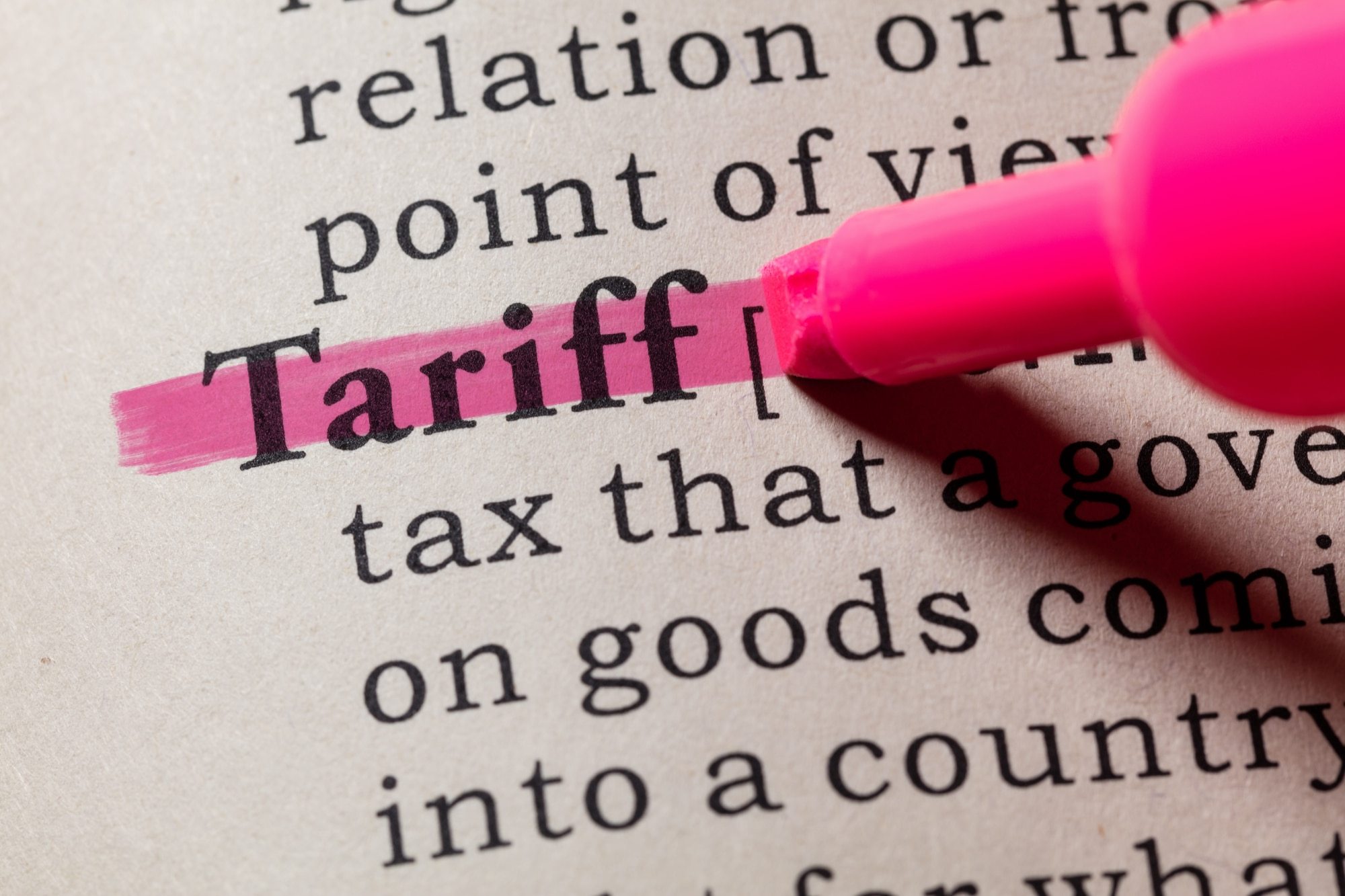
US tariffs are currently dominating the news agenda, with everyone wondering just how much of an impact they will make and to what extent brands will increase their prices. This is a moving situation that continues to evolve so in this article we won’t focus on the tariffs themselves. However, we will take a closer look at the impact of economic uncertainty on consumer confidence and brand loyalty for Shopify stores, and how a loyalty program can help you protect your profit margins.
President Trump has announced a comprehensive overhaul of US trade policy, implementing new tariffs on all imported goods.
If you are a US ecommerce brand importing goods – including products, components or packaging materials – from other countries, then you will be subject to the new tariffs.
If you are an overseas business exporting goods to the US – either directly to consumers or to resellers or other businesses – you will also be subject to the new tariffs.
This can impact your brand in a number of ways:
Gross profit margin = (Net sales – COGS) / Net sales
You may also experience:
Yes. Consumer confidence has fallen considerably twice in recent history.
The first time was when the global pandemic began. The US Conference Board’s Consumer Confidence index dropped from 132.6 in Feb 2020 to 85.7 in April 2020. This was one of the fastest drops ever recorded as consumers panicked about jobs, health, the economy, and how long the pandemic would last.
However, on this occasion, ecommerce boomed (US ecommerce jumped 44% in 2020) due to the lockdowns and lack of physical retail, as consumers cautiously redirected their spending online and consumer confidence ticked back upwards relatively quickly.
The second time was when the US Federal Reserve began increasing interest rates in 2022 to curb inflation. This led to the Conference Board’s Consumer Confidence Index hitting lows of 95-100 in mid-2022, down from 128 in 2021.
This drop in consumer confidence also led to a slowdown in ecommerce growth. US ecommerce sales growth dropped from 18-20% YOY (2020-2021) to ~6.5% in 2022, and Amazon posted its first ever quarterly loss since 2015.
Confidence remained well below pre-pandemic levels all the way through 2023 – recovery took time.
What impact does a drop in consumer confidence have on Shopify stores?
There are multiple ways in which falling consumer confidence impacts your Shopify store:
Looking back to the hike in interest rates in 2022, the Interactive Advertising Bureau saw internet advertising revenues in the US reach a record high of $225 billion in 2023 – a 7.3% year on year increase. As more Shopify stores increase their ad spend, competition increases. The return on that ad spend (ROAS) shrinks, acquiring new customers becomes more difficult and securing more second purchases from them becomes ever more important.
As we’ve outlined above, both the additional costs and the drop in consumer confidence associated with the new tariffs may impact your profits. Many brands on Shopify will have no choice but to pass that impact on to the consumer by increasing prices. And in fact, 80% of Americans are expecting price rises following the implementation of new tariffs.
These price increases can leave even the most loyal customers feeling frustrated, and you could see them hunting for lower prices elsewhere. A survey from Mintel showed that 62% of US consumers say rising prices due to tariffs will make them reconsider loyalty to certain brands.
However, new research from LoyaltyLion has compared loyalty behaviors and engagement during periods of high and low consumer confidence, and found that engaged loyalty program members are a brand’s most valuable asset during times of economic uncertainty.
Redeeming loyalty program members are almost 3x more loyal when consumer confidence slumps. In a previous period of low consumer confidence, brands lost just 3% of revenue from redeeming loyalty program members, versus 8% from non-redeeming members, and 6% from non-members.
Additionally, during the same previous period of low consumer confidence, 88% of purchases made by redeeming loyalty program members were repeat purchases, compared to 50% among non-redeeming members and 22% among non-members.
Engaged – and especially redeeming loyalty program members – remain a more reliable source of revenue when consumer confidence decreases. The good news, is that Shopify stores are – on the whole – better equipped to retain loyal customers than they have been during past consumer confidence dips.
LoyaltyLion’s recent survey highlighted a considerable uptick in loyalty program adoption amongst Shopify stores. Of the 450 brands we surveyed, just 6% did not already have a loyalty program in place, or any plans to implement one. 65% were already investing in loyalty, and almost half of those that weren’t, expected to have implemented a program in the next 12 months.
Shopify stores who have shifted their focus to retention, even before the tariffs came into play, enter this period of economic uncertainty in a stronger position. Why? Because in times of turmoil, consumers look to brands for three key things:
These are all things that a loyalty program can help you deliver more effectively.
A loyalty program provides a vehicle for all three tenets highlighted above. There are also some specific ways you can deploy your program effectively to ensure your loyal customers continue shopping with you, even if their shopping habits slow down.
If you’re not already investing in loyalty, as our data highlights, now is the time to start – for a few key reasons.
As already discussed, acquisition costs often rise in terms of economic uncertainty, and ROAS is likely to drop. As such, it’s even more important to increase the lifetime value of the customers you’re acquiring. A loyalty program is the most effective way to secure second purchases and more.
Secondly, as our data shows, many of your competitors are already investing in loyalty or on the way to doing so. Once they have enrolled your potential shoppers into their program, it will be significantly harder to win them over to your brand.
And finally, when things are uncertain customers value trust and communication. A loyalty program opens doors to both of those things, offering you more opportunities to collect data to personalize messages, and communicate between purchases. This combination could help you protect your profit margins, and retain more customers, even if you do have to increase prices.
Looking for some advice on how to navigate tariffs? We’re here to help! Set up a time to talk with one of our team today.






© Copyright 2026. All rights reserved.

.jpg)